
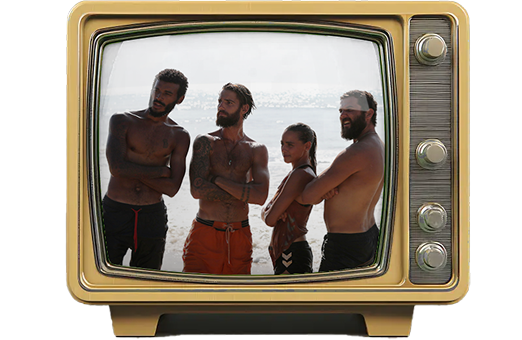
In 2016, I joined Survivor Turkey production team to design games for it.
THE UNBEARABLE LIGHTNESS OF WHAT’S HABITUAL
By the time I joined it, the show was a prime time runner, and the team had been producing game shows all over the world for so many countries almost a decade. They had an extraordinary ability to produce and move games really fast; yet, their methods lacked structure for scalability. The way of solving problems instinctively as they go was working effectively so far, because the showtimes were only 2 hours per week. But the production team had been started struggling to keep up with Turkish production’s demands on airing the show for more than 10 hours a week.
This particular demand had managed the whole production turn into an almost completely different show: By the end of the previous season each episode was at least 2 hours long and airing 3 to 5 times a week, with a minimum 8 hour game time. During the upcoming 2 year time I designed games for it, I was never confirmed about this, but I have always believed that it was Eze, the line producer, who suggested maybe someone Turkish should be hired within the line production who could help with the game designs.
şlfsk
COMPETITION CULTURE
In the beginning I invested all my time to understand the hype of the show, while Gizem Kelleci Yüce, who was hired at the same time with me was iterating game endings prolifically because she was a fan of the show and knew intuitively what needed to be delivered. Comparing myself to her, I was terrified to be rendered useless, but soon enough came to realize that the Turkish format consisted of rounds (repetition) which often felt very consistent in length and rhythm which was different than o.g. Survivor format.
lkdjsf
HOW TO GIANT STRUCTURES IN A REMOTE ISLAND
I recognized that the sweet spot for each game round was around one minute and twenty seconds. This wasn’t a random figure: it was the perfect duration to keep the tension alive for the viewer, while allowing the competitors to perform at their best without exhausting the audience’s attention.
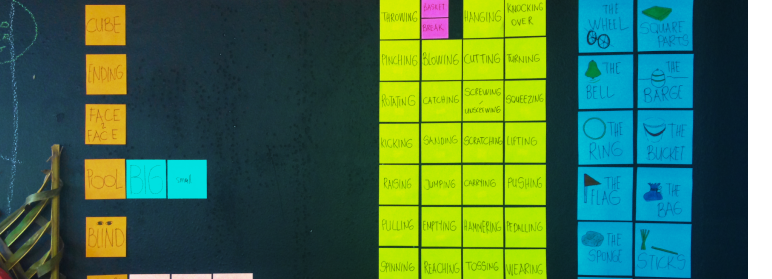
With this benchmark in mind, I began redesigning the way we approached game development. I suggested we dissect game components into Distances, obstacle types, probs and try mix-matching. To speed up experimentation, I introduced rapid prototyping with 3D modeling tools, also because we had to reuse probs and recycle structures in some many fashionable ways over and over again to cut costs.
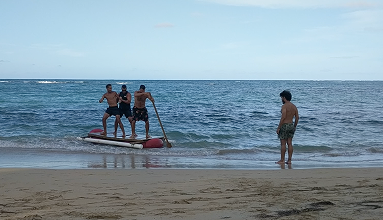
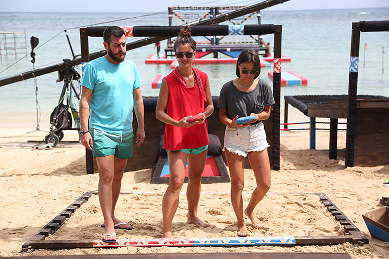
This allowed us to fetch ideas to producers who enjoyed participating very much in the design process. Sketching in 3D not only help cut cost from prototyping but also helped with the language barrier between the line producers and the execs since one party was Argentinian and he other Turkish.
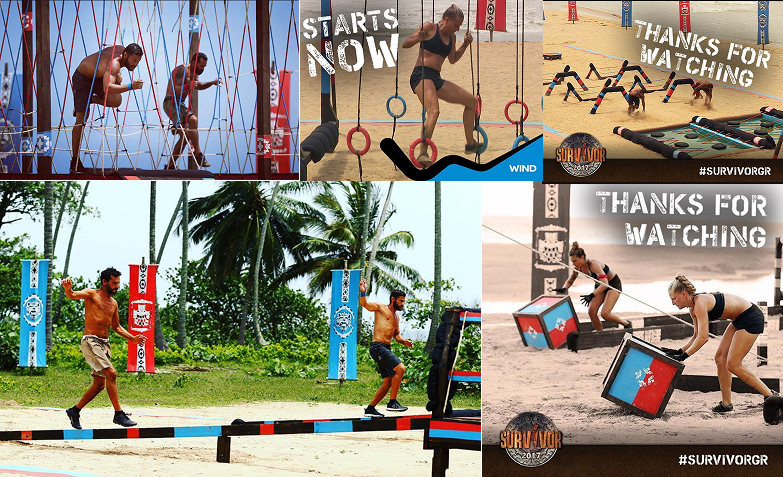
As these processes took root, something remarkable happened: methods I implemented started laying out a replicable system. What began as a solution for Survivor Turkey soon evolved into a set of exportable products. Before long, with the same game sets, the team started producing for Survivor Bulgaria and Survivor Greece.
dşlfsk
CONCLUSION
In the end, my contribution was not just about designing games — it became industrializing creativity. I wasn’t aiming for this particular outcome, however my educational background and culture had a huge impact on that particular outcome. Although I am not claiming the whole shift, I am happy to declare I had a great role in it. By building a framework around. spontaneity, I helped Survivor’s challenges into an international format, blending entertainment design with process innovation. It was professionally very satiffying to see that the team began to see that creativity and structure were not opposites, but partners.